Enter URL
Enter the full URL you want to test (e.g. https://example.com/old-page).

Check HTTP status codes and trace the full redirect chainYour browser hides the raw status code behind a nicely rendered page, but search engines and APIs act on it. Enter any URL to see exactly what the server says: the precise code, the full redirect chain, and the headers that matter.
Check HTTP status codes and trace the full redirect chain
Enter the full URL you want to test (e.g. https://example.com/old-page).
Click "Check status".
Review the final status code and expand the redirect chain to see every hop.
The HTTP Status Checker performs a live request to any URL, captures the final status code and records the complete redirect chain, so you can see exactly what browsers and search engines experience.
SEOs use it to audit redirects after migrations, developers use it to debug APIs and broken links, and site owners use it to verify that old URLs land where they should.
When the rendered page is not the whole story.
Catch pages that show "not found" content while returning 200 and keeping dead URLs indexed.
See every hop in sequence and collapse chains that waste crawl budget and dilute link equity.
Confirm old URLs land where they should after a site migration completes.
Verify endpoints and webhook targets return the codes your integrations expect.
What the numbers actually tell you.
Redirects show exactly where the page went, hop by hop through 301s, 302s, and 307s.
Use 410 Gone for deliberately removed content and 404 for genuinely missing pages.
These redirects keep the request method intact, which matters for form submissions and APIs.
Whatever the server says, you will see it here unfiltered. No signup, instant results.
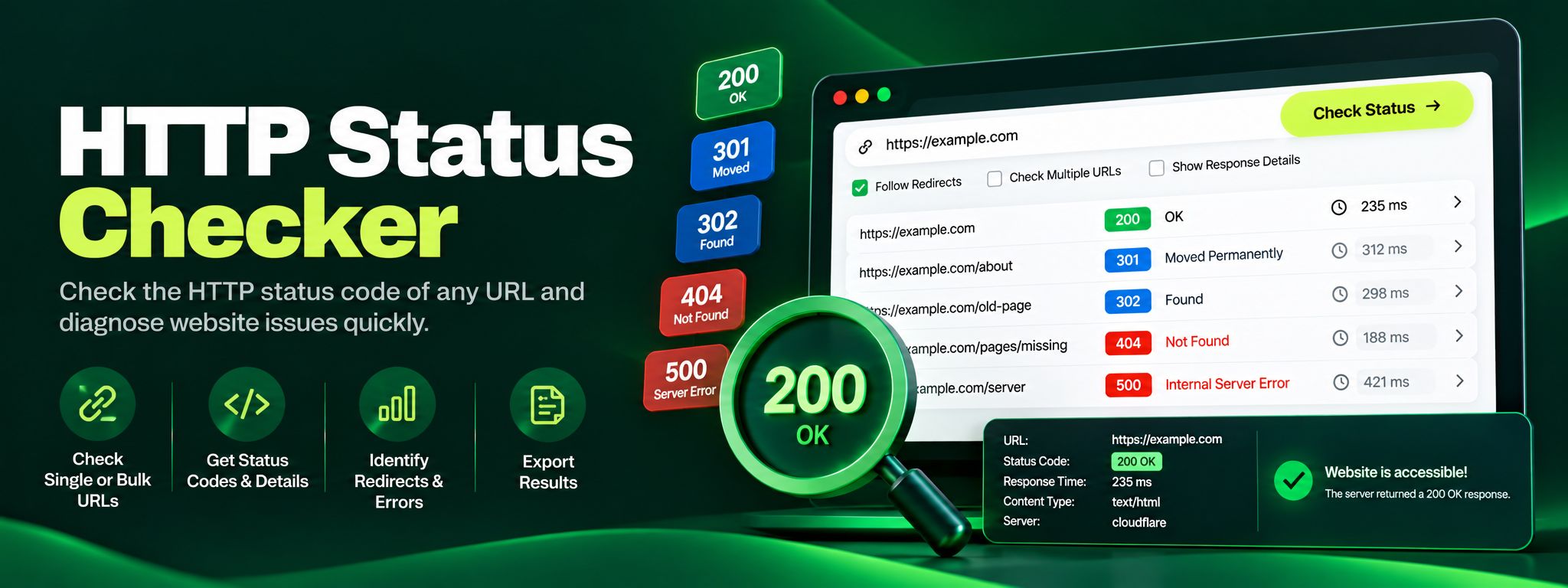
Free HTTP status checker. Check any URL's status code, trace redirect chains hop by hop, and fix 404, 301 and 500 errors before they silently hurt your SEO.
Read article →
Free SSL certificate checker: verify any website's certificate issuer, expiry date, days remaining, covered domains and fingerprint. Avoid expiry outages.
Read article →