Choose your image
Choose an image file from your device.

Convert any image to a Base64 data URL for code and CSSSometimes a page needs an image but cannot afford another HTTP request. Encode any image as a Base64 data URI and paste it directly into HTML or CSS, so the browser renders it with zero extra downloads.
Convert any image to a Base64 data URL for code and CSS
Encoded privately in your browser. Nothing is uploaded. Best for small assets: Base64 adds about 33% size.
Choose an image file from your device.
Copy the full data URL, the raw Base64, or a ready CSS/HTML snippet.
Paste it into your code where an image URL would go.
The Image to Base64 Converter reads your file and produces every format developers actually paste: the complete data URL for img tags, the raw Base64 string for APIs and databases, a CSS background-image line, and an HTML snippet. It shows the encoded size next to the original so you can see the 33% overhead before shipping. Everything runs in your browser with no upload.
Images without the extra request.
Frontend developers inline SVG-style icons and small logos this way. The browser renders them with zero extra downloads, which keeps pages snappy.
Email developers embed images that survive aggressive image blocking. It is a standard trick for email templates where external images get blocked.
Hobbyists build portable single-file HTML documents that must work offline. The image travels inside the file, so nothing external can break.
The output shows the encoded size, so you know exactly how much weight you are adding to your page. No surprises in the bundle.
The 33 percent rule.
A realistic sense of scale helps: Base64 encoding inflates data by about 33 percent, so a 30 KB icon becomes roughly 40 KB of text in your page.
That is why inlining is recommended only for assets under about 50 KB. Encoding a 2 MB photo this way would bloat your HTML badly.
The sensible workflow is to compress the image first, then encode the small result. Shrink it, then inline it, and the page stays fast.
No signup, no server round trip. Proprietary graphics and unreleased designs stay private.
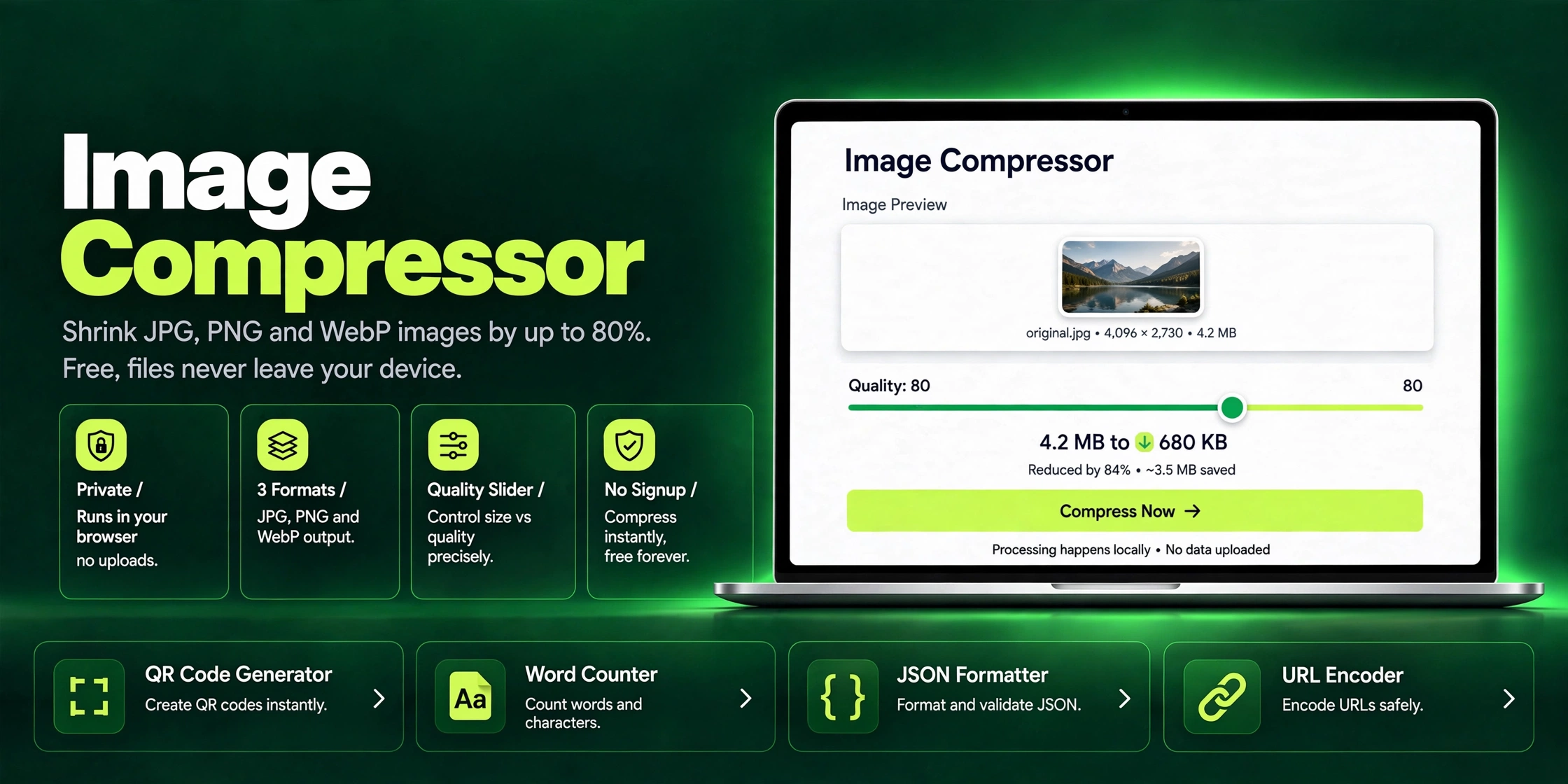
Cut JPG, PNG and WebP file sizes by up to 80% with no visible quality loss. Here is how image compression works and how to do it free in your browser.
Read article →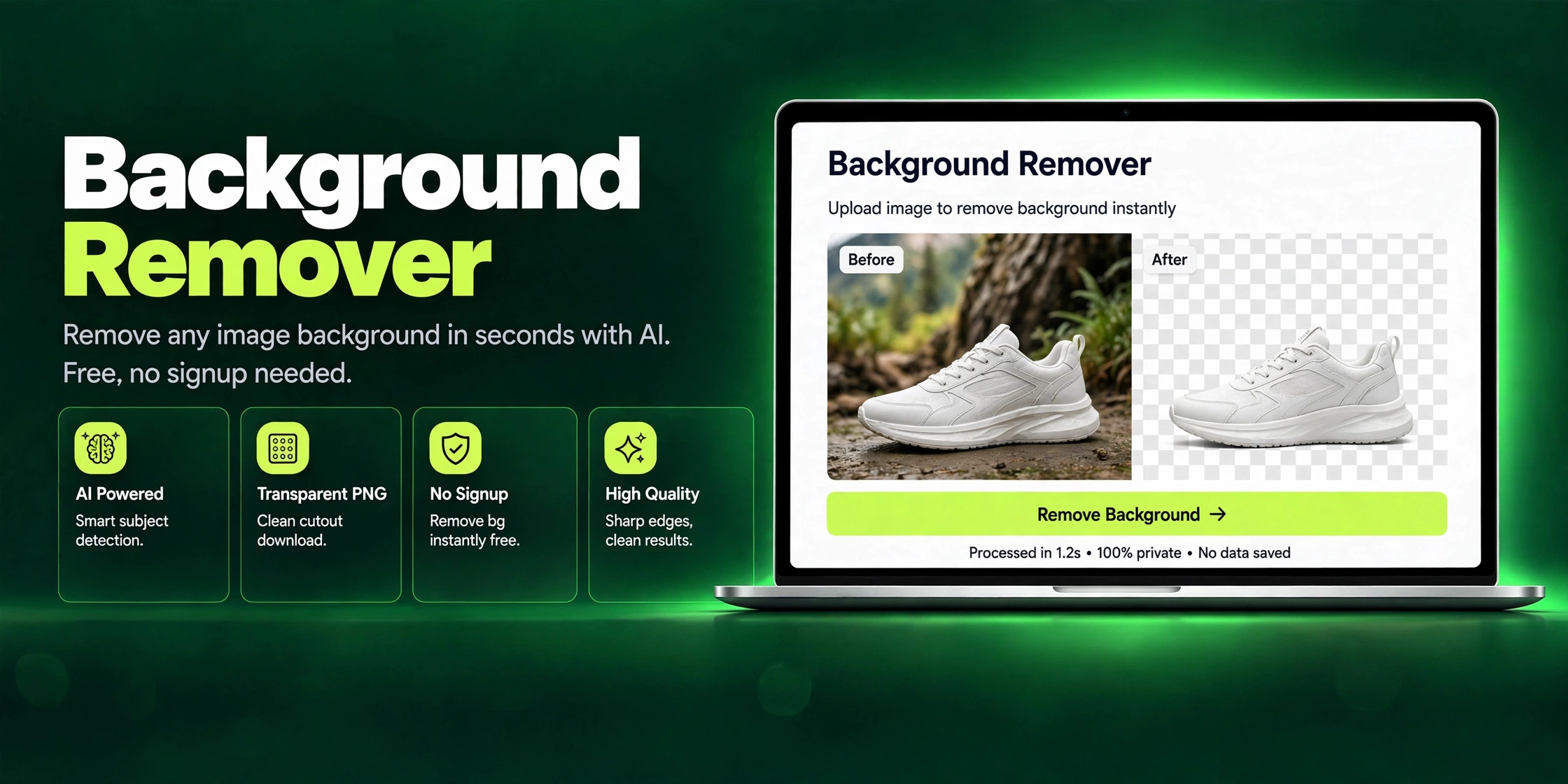
Remove the background from any photo in seconds and get a clean transparent PNG, free, with no signup required.
Read article →