Enter text or URL
Paste your text, or enter a page URL to analyze live.

Find the most-used keywords in any text or web pageBefore you optimize a page, find out what it is already saying. Search engines build their picture of a page's topic from the words it repeats. This checker computes density for single words plus two and three-word phrases.
Find the most-used keywords in any text or web page
Paste your text, or enter a page URL to analyze live.
Click "Analyze" to run the word frequency analysis.
Review the density tables for words, 2-word and 3-word phrases.
Keyword density analysis shows which terms dominate your content. This tool filters out stop words and computes density for single words, pairs and triplets, spotting intentional targeting and accidental repetition. For URLs it fetches the page like a search crawler, extracts the visible text, and reports total words, unique words and reading time alongside the density tables.
Three ways SEOs use it.
Verify that a page actually emphasizes its target keyword, since roughly 1 to 2 percent is the common comfort zone.
Spot keyword stuffing before it trips spam filters, especially in older or outsourced content that nobody reviewed carefully enough yet.
Reverse-engineer competitors: run a rival's ranking page through the tool and see which phrases they lean on most for rankings.
Writers use it as a pre-publish sanity check: draft the article, run the tables, confirm the target phrase appears naturally.
Read the numbers right.
Optimize for readers first, then let the numbers confirm you did it right.
Common words like "the" are filtered out so meaningful terms surface.
Single words plus two and three-word phrases catch both deliberate targeting and accidental repetition.
Natural first, numbers second: the tables confirm your targeting without replacing your judgment.
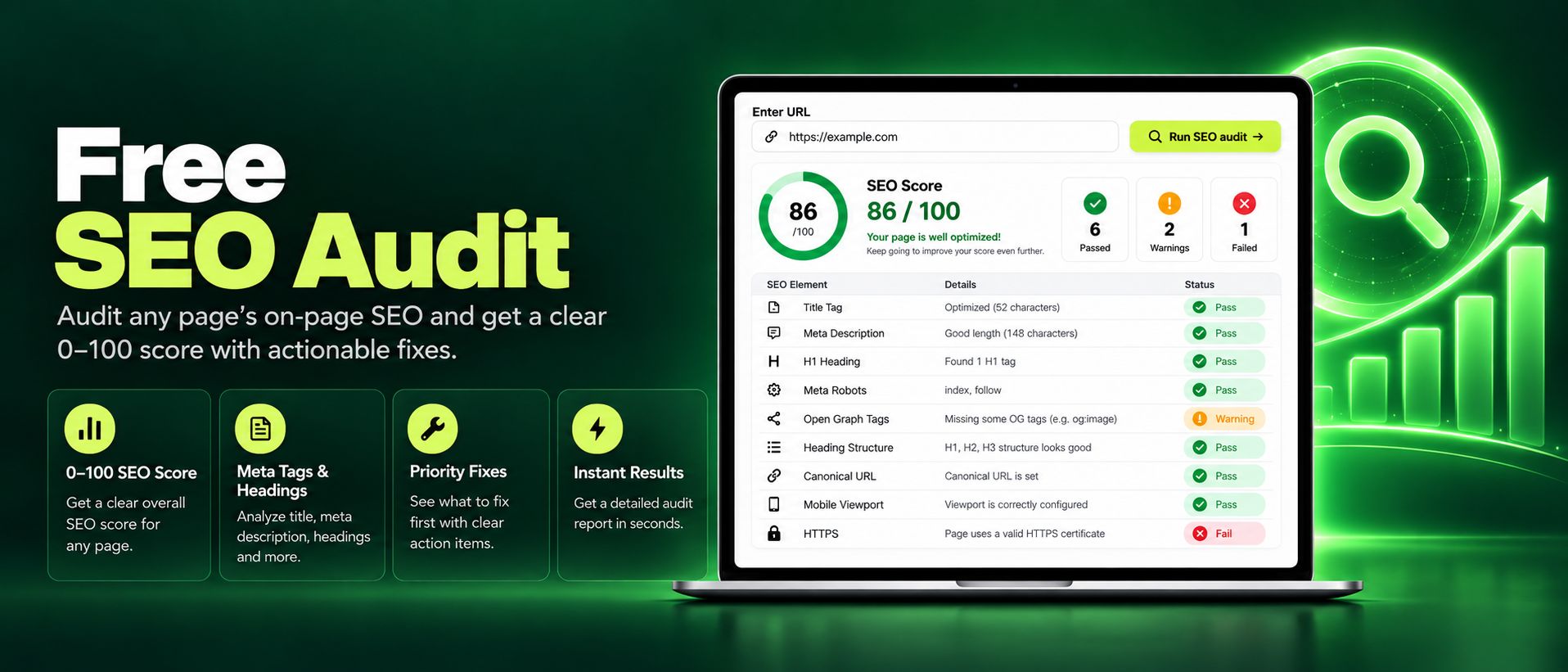
Run a free SEO audit on any page and get an instant 0 to 100 score. Check titles, meta tags, headings, images, and links, with clear actionable fixes today.
Read article →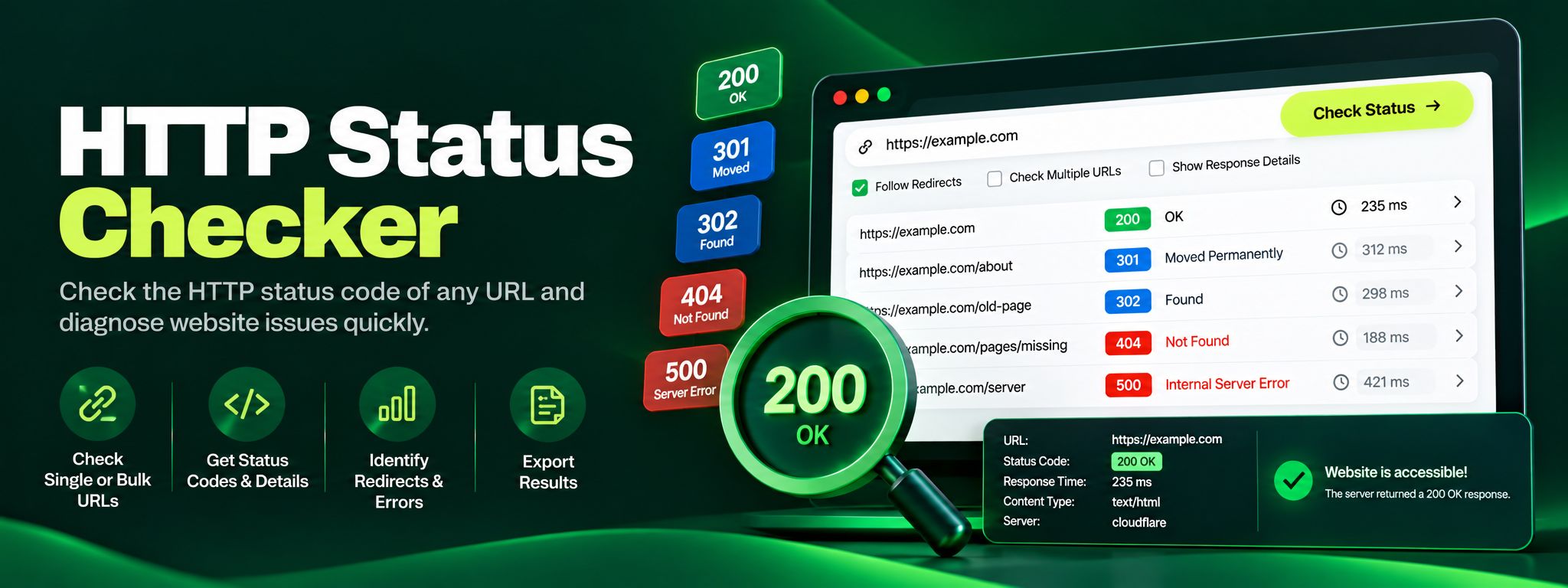
Free HTTP status checker. Check any URL's status code, trace redirect chains hop by hop, and fix 404, 301 and 500 errors before they silently hurt your SEO.
Read article →