Paste your URL or text
Paste or type the URL or text you want to convert.

Encode or decode URLs and query strings instantlyURLs have a strict alphabet: spaces, ampersands, and non-English characters break a link if they appear raw. This tool translates both ways, percent-encoding special characters into %XX form, and decoding garbled URLs back into readable text.
Encode or decode URLs and query strings instantly
0 characters. Runs 100% in your browser, nothing is uploaded.
Encode component escapes everything except letters, digits and - _ . ! ~ * ' ( ), which is right for a single query value. Encode full URL keeps : / ? & = intact so the link still works as a whole.
Paste or type the URL or text you want to convert.
Choose Encode component, Encode full URL, or Decode.
Copy the result with one click and use it in your link or code.
URLs can only contain a limited set of characters, so anything outside that set has to be percent-encoded first. This free encoder gives you both flavours developers actually use: component encoding for individual values (like encodeURIComponent) and full URL encoding that keeps the scheme, slashes and query structure intact.
Decoding reverses the process and reports a clear error on broken percent sequences. Everything runs locally in your browser, so you can safely paste staging URLs, signed links or internal addresses.
The everyday moments URLs need translating.
Building query strings by hand without encoding is the classic source of APIs receiving truncated or mangled values. Encode each parameter value before joining them, and the fix is always that simple.
Links copied from emails, logs, and analytics reports often arrive fully encoded, a wall of percent signs where readable text should be. One decode pass restores the original instantly.
Non-ASCII characters in names or addresses become their UTF-8 percent-encoded forms. Without encoding, spaces, ampersands, and question marks break a URL or silently change its meaning.
The subtle trap is double encoding, where an already-encoded value gets encoded again and %20 becomes %2520. If a server complains about a value that looks right, check for a stray second pass.
Small rules, fewer broken requests.
Encode the parameter values, not the whole URL. The :// and ? separators must stay literal, or the URL stops being a URL.
An already-encoded value encoded again turns %20 into %2520. If a request fails mysteriously, look for a stray second pass.
Decoding is the fastest way to understand what a logged request actually contained or where a pasted link really points.
Translate URLs both ways in seconds. Free, instant, no signup, no waiting.
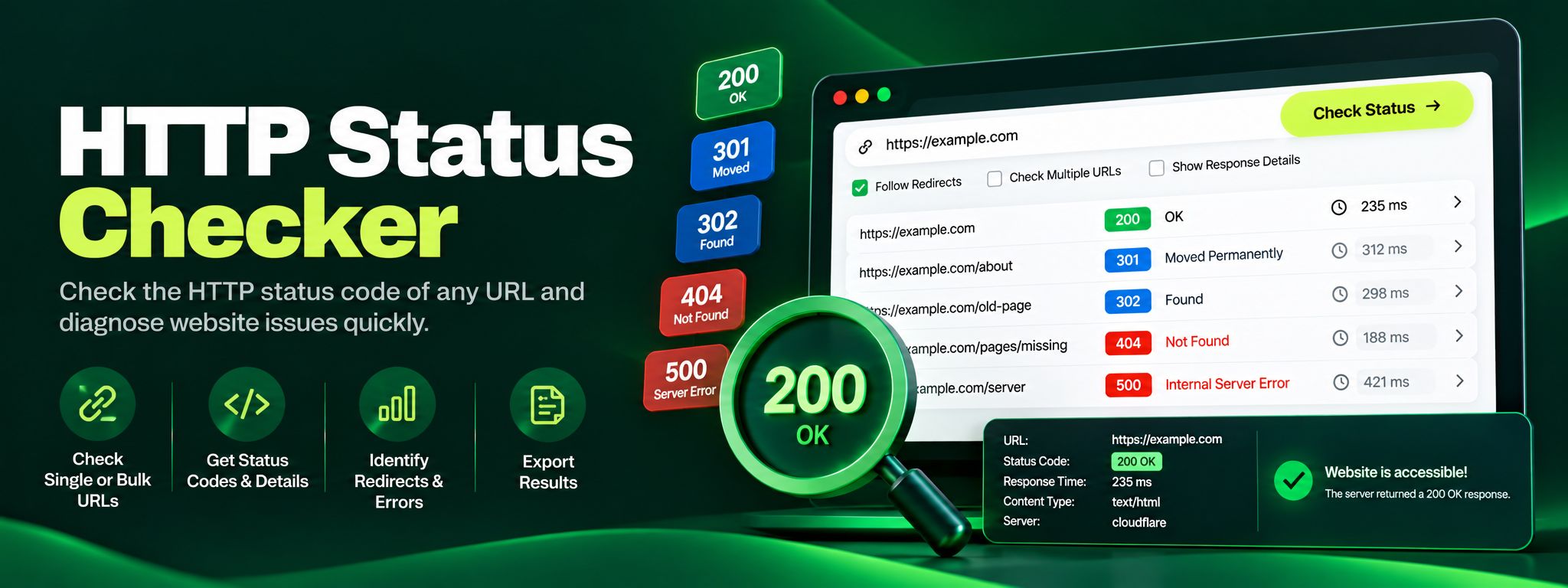
Free HTTP status checker. Check any URL's status code, trace redirect chains hop by hop, and fix 404, 301 and 500 errors before they silently hurt your SEO.
Read article →
Discover the technology stack behind any website in seconds. Our free Technology Stack Detector uncovers CMS, frameworks, hosting, and analytics instantly.
Read article →